Taking payment
A tag on the counter instead of a terminal on the counter.
Across the till, on your website, or by invoice. Nothing rented, nothing deducted, and the money is yours in about a second.
No terminal, no rental, and nothing deducted on the way. The money is in your wallet before the customer has put their phone away.
At the counter, and on a link
The two screens a payment actually happens on.
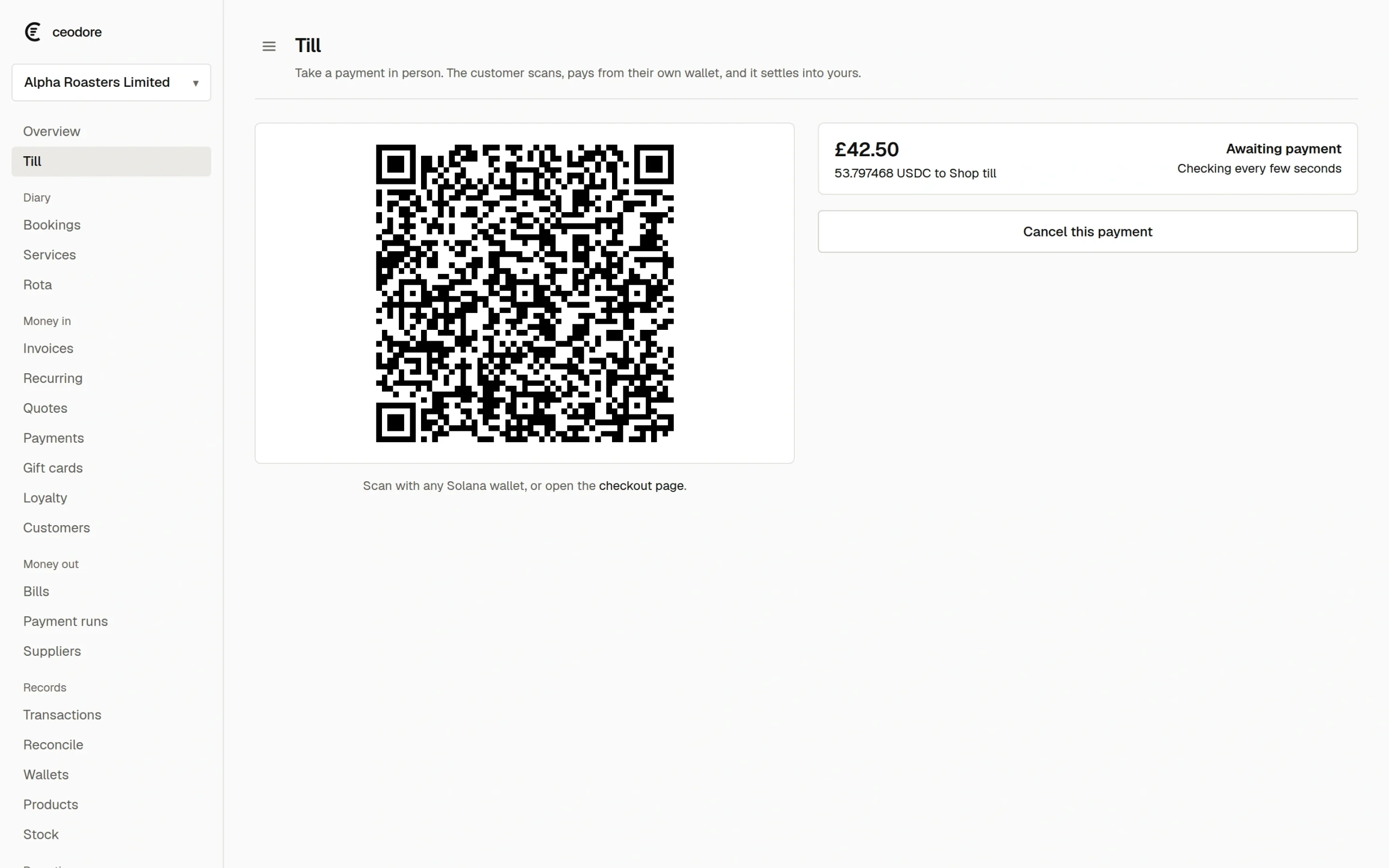
Your till, mid-sale. Tap the tag or scan the code, and it confirms here in about a second.
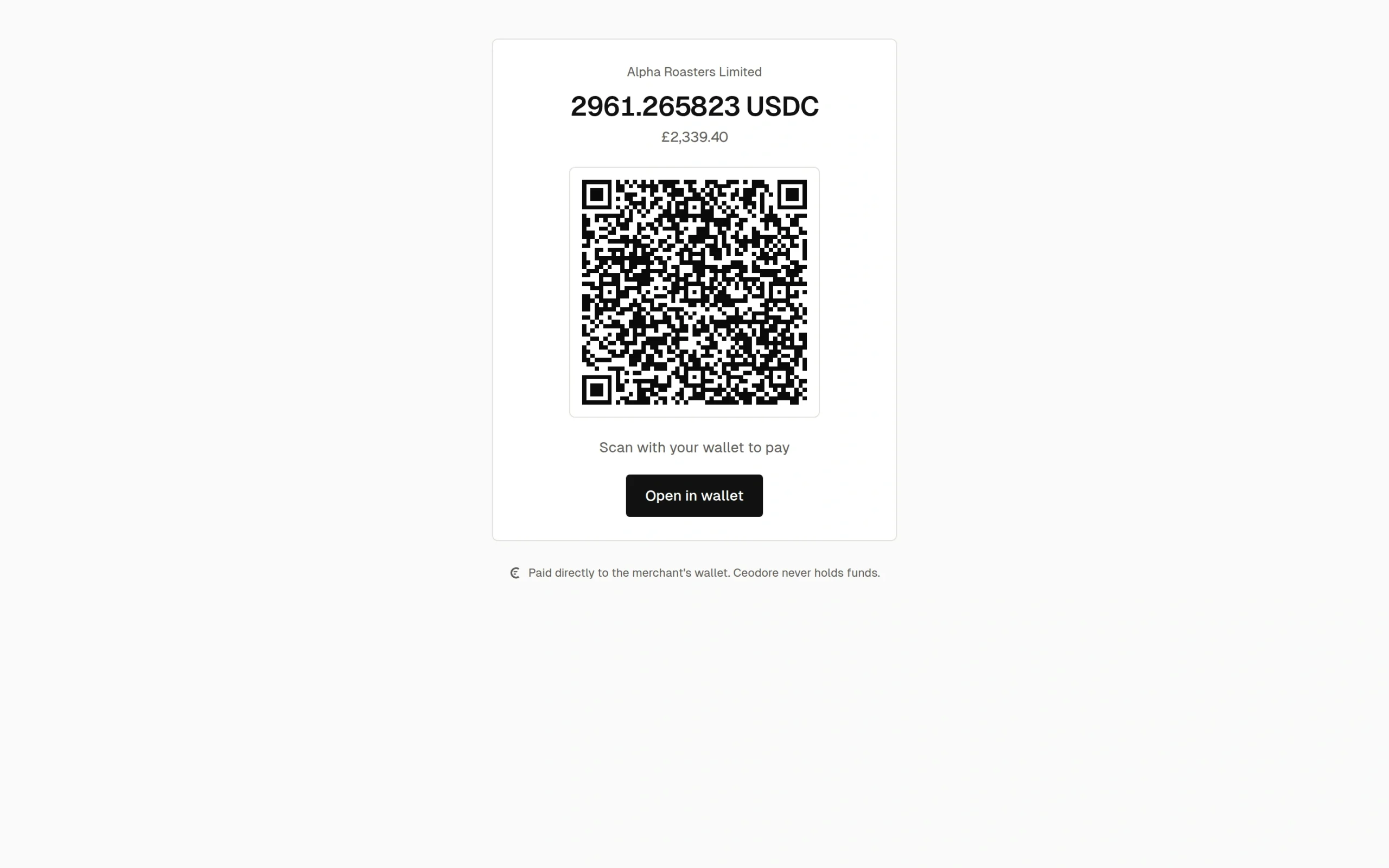
What your customer sees on a payment link. No account, nothing to install, nothing to sign up for.
In person
Ring it up, they tap, it is paid.
Your till writes the amount to a tag sitting on the counter. The customer holds their phone to it, their wallet opens with the right amount already filled in, and they approve it. The screen says paid before they have put their phone away.
Tap, or scan
A tag on the counter for the people who expect to tap, a code on screen for the people who would rather scan. Same payment either way.
Thirty pounds of hardware
A small writer plugged into the phone or tablet you already have, instead of a card terminal at three hundred pounds and a monthly rental.
Built for a queue
The tag clears after ninety seconds, so the next customer cannot tap the last order. Staff PINs, tips, split payments and printed receipts all work as you would expect.
Online
A checkout page, or just a link.
Send a payment link by email, text or WhatsApp and the customer pays from wherever they open it. No account with anyone, no sign-up, no app they have to install first.
For a shop, there are plugins for Shopify and WooCommerce that put it alongside your other payment methods, and an API if your site was built from scratch.
Hosted checkoutA clean page with your name and logo on it. Nothing of ours in the way.
Payment linksSingle-use or reusable, with an expiry if you want one.
Shopify and WooCommerceOrders and payments flow straight into your books.
API and webhooksFor a bespoke site, with a sandbox to build against first.
Quote to invoice
Sent, accepted, invoiced. Nothing retyped.
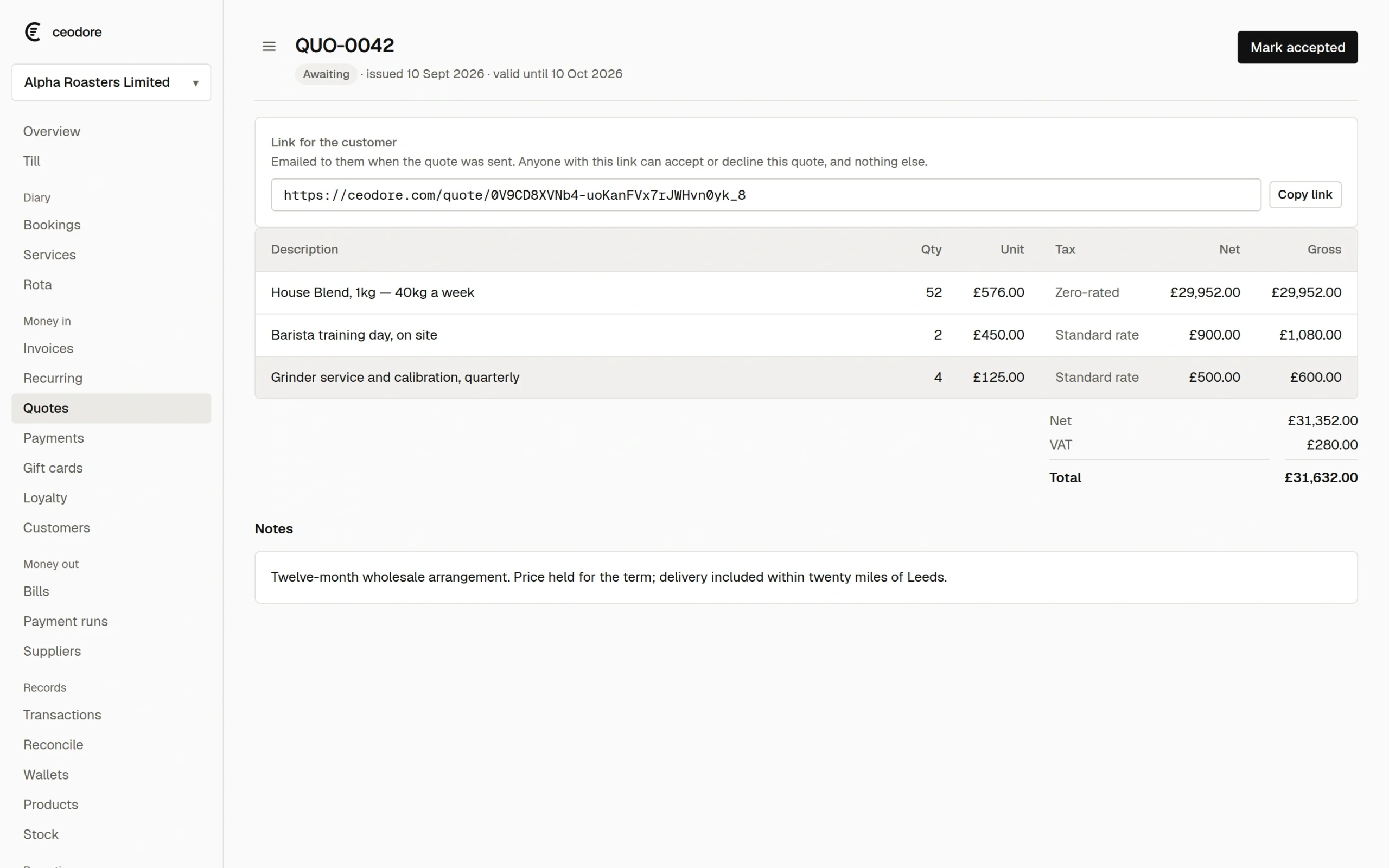
Sent, and waiting.
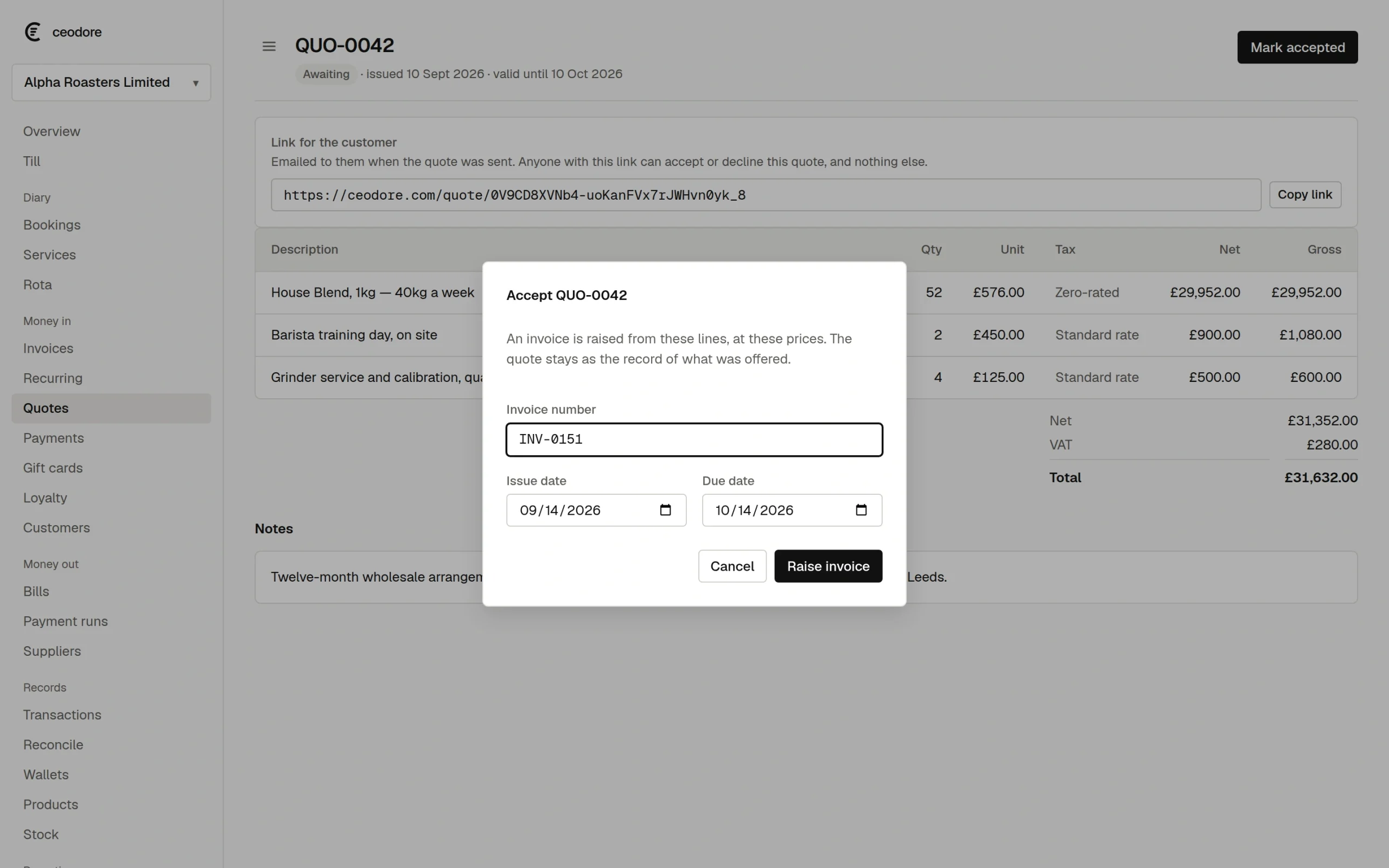
Accepted by the customer, on a link.
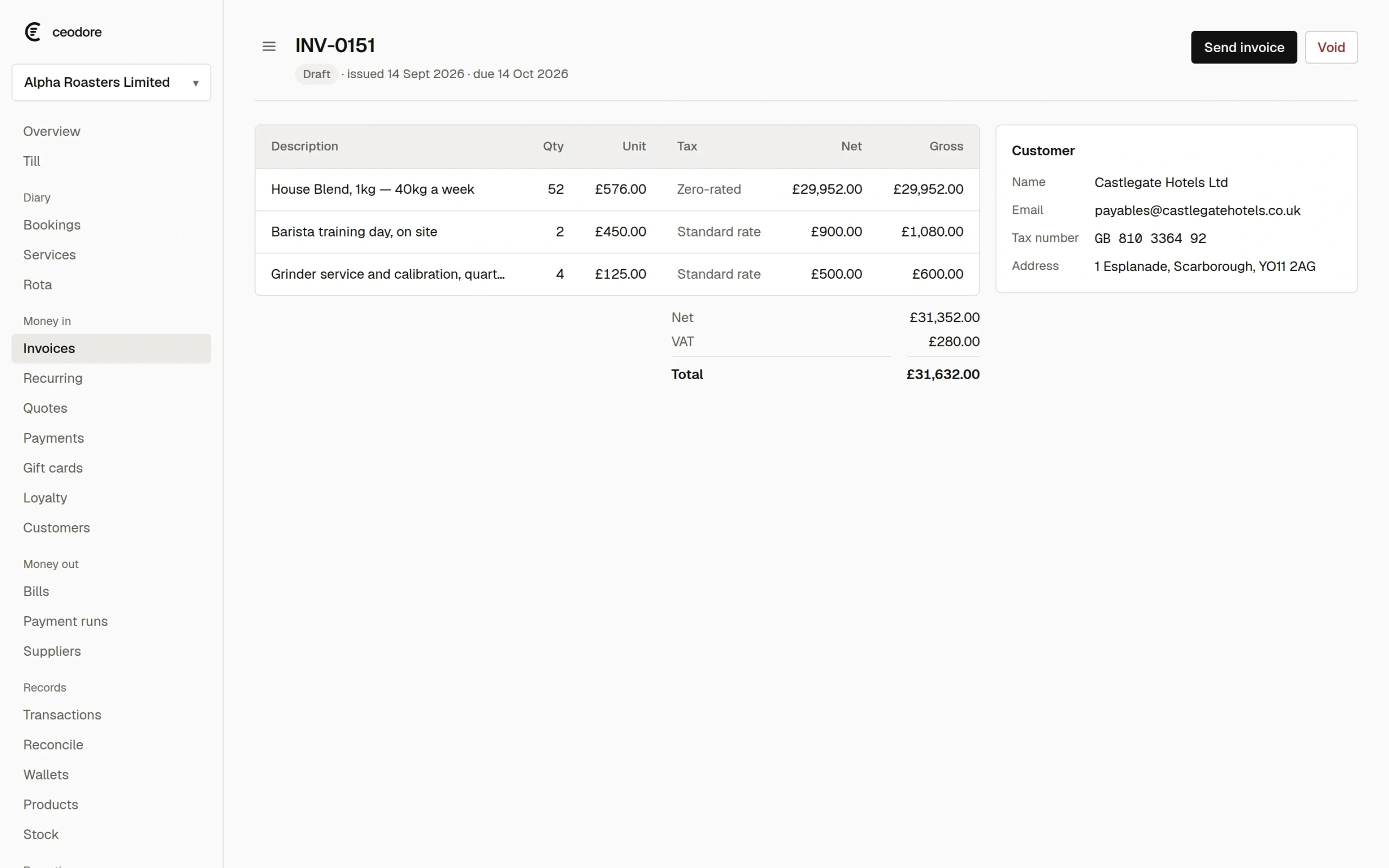
The invoice it became, lines and totals carried across.
Quote to invoice in one clickYour customer accepts by link and nothing is retyped.
Chased for youReminders on a schedule you set, worded the way you would word them.
Priced in poundsYou invoice in sterling. The conversion is handled and recorded.
Recurring and retainersSet it once for the customers who pay you every month.
By invoice
The part that usually eats a Sunday.
Quotes, invoices, reminders and receipts, with the payment attached to the right invoice automatically when it arrives. Aged receivables tell you who is late without you having to work it out.
Deposits and part payments are handled properly, so a job taken on with money up front does not turn into a reconciliation problem later.
Paid in stablecoins, so the amount does not move
A £2,000 invoice is worth £2,000 when it arrives. Stablecoins hold their value, which is what makes them usable for a business rather than something to speculate on.
If a customer wants to pay in something else, a regulated conversion partner turns it into stablecoins before it reaches you. You are never left holding something that moves.
Take one payment and see.
Thirty days free, no card details. Send yourself an invoice if you want to watch it land in the books.